
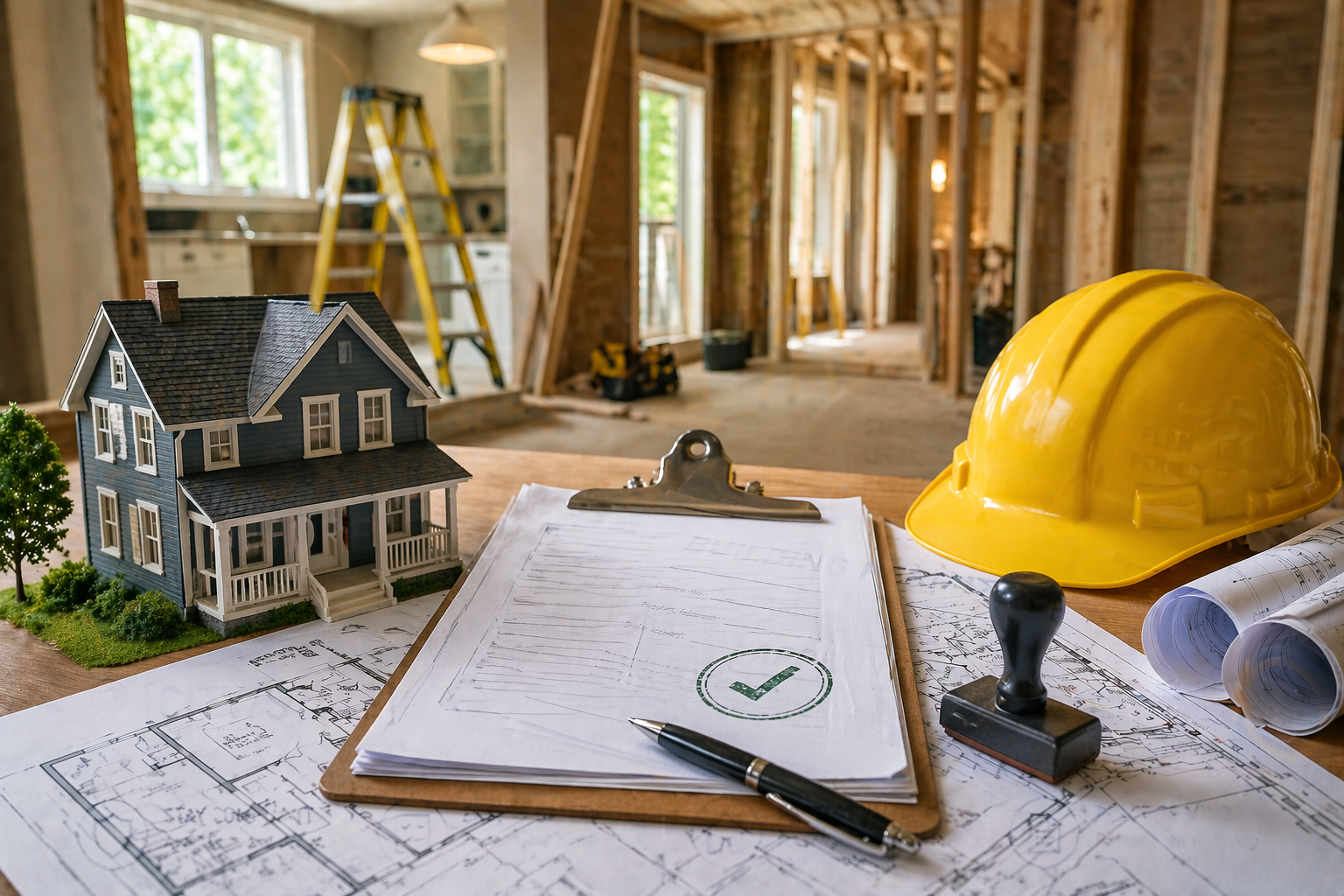
Why Permits Are Essential
A building permit is your local municipality’s official approval to move forward with construction. In Bucks County, permits are issued at the township or borough level, but they generally follow Pennsylvania’s Uniform Construction Code (UCC). That means your project must meet established safety and building standards, regardless of whether you live in Doylestown, Newtown, or Bensalem.
Permits exist to protect you. They ensure your home improvements are structurally sound, electrically safe, and properly installed. They also create a documented record of the work, which becomes important if you decide to sell your home in the future.
Homeowners sometimes view permits as red tape, but they’re actually a safeguard. Skipping them may save time initially, but it can lead to serious issues later—from fines to failed home inspections during resale.
What Types of Remodeling Projects Require Permits?
One of the biggest misconceptions is that only major renovations require permits. In reality, many types of work fall under permit requirements in Bucks County.
If your home remodeling project involves structural changes, system upgrades, or additions, a permit is almost certainly required. This includes things like removing or relocating walls, adding rooms, building decks, installing HVAC systems, or upgrading electrical and plumbing. Even finishing a basement typically requires approval because it changes how the space is used.
On the other hand, purely cosmetic updates—like painting, installing new flooring, or replacing cabinets without altering layout—usually don’t require permits. The challenge is that the line between cosmetic and structural isn’t always obvious. For example, what looks like a simple wall removal could actually affect your home’s load-bearing structure.
That’s why it’s always wise to verify requirements before starting. Making assumptions here is one of the most common (and expensive) mistakes homeowners make.
The Role of Local Municipalities
Unlike some regions where permits are handled at a county level, Bucks County operates through individual municipalities. Each township or borough manages its own permit process, timelines, and specific requirements.
While all municipalities adhere to the UCC, local zoning rules can add another layer of complexity. These regulations determine how your property can be used, where structures can be placed, and how large they can be. Depending on your project, you may need zoning approval before you can even apply for a building permit.
This localized system is one reason homeowners often feel overwhelmed. Requirements can vary just enough from one township to another to create confusion—especially if you’re trying to manage everything yourself.
Understanding the Inspection Process
Getting a permit is only the first step. Inspections are required throughout the construction process to ensure the work meets approved plans and code requirements.
As your project progresses, inspectors will visit at key milestones. Early inspections often focus on foundational elements or framing. Later, they review electrical, plumbing, and HVAC systems before walls are closed up. A final inspection confirms that everything is complete and compliant.
These inspections aren’t meant to slow your project down—they’re there to catch issues early, before they become expensive problems. If something doesn’t pass, corrections need to be made before work continues. While that can feel frustrating in the moment, it ultimately protects your home and your investment.
Once all inspections are successfully completed, you’ll receive final approval, often in the form of a certificate of occupancy or completion. This document is essential, especially if you plan to sell your home later.
What Happens If You Skip Permits?
It’s not uncommon for homeowners to consider skipping permits to save time or avoid fees. However, this decision often leads to bigger problems than it solves.
If unpermitted work is discovered—whether during construction, an appraisal, or a home sale—you may face penalties, delays, or even a stop-work order. In some cases, municipalities require homeowners to remove or redo work that doesn’t meet code.
There are also long-term consequences. Unpermitted renovations can complicate insurance claims and make it harder to sell your home. Buyers and lenders typically want assurance that all work was done legally and safely.
What seems like a shortcut can quickly turn into a costly setback.
Planning Ahead for a Smoother Project
The permitting process in Bucks County isn’t instant. Depending on the scope of your project and your municipality’s workload, approvals can take days or even weeks. Larger or more complex renovations may require detailed plan reviews, revisions, and multiple approvals before construction can begin.
This is why planning ahead is so important. Factoring permit timelines into your project schedule helps you avoid unnecessary delays and keeps everything moving forward efficiently.
It also gives you time to gather the right documentation, finalize designs, and ensure your project aligns with local regulations before breaking ground.
Why Working With the Right Contractor Matters
Navigating permits and inspections on your own can be overwhelming, especially if you’re unfamiliar with local requirements. This is where choosing the right remodeling contractor becomes critical.
An experienced remodeling professional doesn’t just handle construction—they help guide you through the entire process. That includes identifying which permits are needed, preparing and submitting applications, coordinating inspections, and ensuring all work meets code from the start.
This level of expertise reduces risk, saves time, and gives you confidence that your project is being handled correctly.
Make Your Remodel Easier With 215 Build
If you’re planning a home renovation in Bucks County, working with a knowledgeable team can make all the difference. 215 Build understands the ins and outs of local permitting and inspection processes, and they help homeowners navigate every step with clarity and ease.
Instead of worrying about township requirements, paperwork, and scheduling inspections, you can focus on the exciting parts of your remodel—design choices, finishes, and seeing your vision come to life.
From initial planning to final approval, 215 Build ensures your project is compliant, efficient, and built to last.